
This was an elite team – with experience working inside the dark web and with Tor – also known as the onion router – where Silk Road was hidden. But even with his identity hidden, Ross was starting to get nervous. Determined to find the source of the drugs, the agent showed up at a residence where one of the packages was headed – to conduct a “knock-and-talk.”
What Has Replaced Silk Road As The Biggest Dark Web Marketplace?
Ulbricht was given two life sentences, plus 40 years for running the site, which allegedly facilitated $183m in drug sales. There cannot be many international crime leaders inspired by “The Princess Bride”, a cult children’s fantasy movie released in 1987. Ross Ulbricht, the founder of the Silk Road, the very first dark-web drug-trading network, certainly was. When users signed up for the website, which went live in 2011, they were greeted by a message from the founder, “Dread Pirate Roberts”, the hero of the film, explaining how the site worked. Shielded by Tor, which hides website servers, and using bitcoin to make payments, users could order all manner of goods and services without revealing personal information. Ulbricht was arrested in a San Francisco public library in 2013 in an elaborate sting operation, while allegedly chatting online with someone he thought was a colleague but was in fact an undercover federal agent.
For Clark, “the question of whether to end another man’s life was simple and stress-free,” Neff told the judge in the prosecution’s sentencing statement. Born in Austin, Texas, in 1984, Ulbricht studied physics and pursued a graduate scholarship at Penn State before developing an interest in libertarian ideals and Bitcoin, according to Wired. His ambition to create a marketplace free from government oversight ultimately led to the creation of Silk Road. Ulbricht was never charged in this case over the alleged order of contract killings, although the US government presented evidence which it claimed suggested his pseudonym, Dread Pirate Roberts, had ordered them. He was separately indicted in Maryland over one murder-for-hire charge but this charge was dropped after his two life sentences in New York were finalized. It is a priority for CBC to create products that are accessible to all in Canada including people with visual, hearing, motor and cognitive challenges.
- As part of the Big Employers in Forensics series, Matt has conducted detailed interviews with forensic experts at the ATF, DEA, FBI, and NCIS.
- He’d been caught red-handed, and investigators had connected the digital and physical worlds, unmistakably linking Ulbricht, the Eagle Scout, to DPR, the underworld kingpin.
- When ordered, these cursed gnomes are sometimes filled with animal faeces.
- Unfortunately, the current world of darknet markets isn’t much better — rife with shady characters, scams, and instability.
Origins: Who Created Silk Road?
President Trump fulfilled a campaign promise to Libertarian supporters on his second day back in office by pardoning the former creator and owner of an underground e-commerce website known for drug trafficking. Ulbricht’s lawyer proposed that the chat logs and documents were planted inside by way of BitTorrent (a torrent downloading client), which was running on Ulbricht’s computer during the time of his arrest. Marshals Service auctioned 29,657 bitcoins online in 10 blocks, estimated to be worth $18 million at that time. Another 144,342 bitcoins which had been found on Ulbricht’s computer were kept, roughly $87 million. Studying the Silk Road as a case study in criminal justice programs is essential to understanding the complexities of online criminal activities and the strategies employed by both perpetrators and law enforcement. It provides invaluable insights into the challenges authorities face in tackling cybercrime and the ever-evolving techniques used by criminals to evade detection.
What Happened To The Seized Bitcoins?
To maintain users’ and his own anonymity, Ulbricht set up Silk Road on the dark web, a part of the internet invisible to traditional search engines. Silk Road did not accept cash or credit cards; users had to pay with bitcoin, a cryptocurrency. Ross Ulbricht, the infamous ‘Dread Pirate Roberts’, creates the Silk Road marketplace to sell drugs on the dark web. After two days of intermittent service, Silk Road’s administrators told users on Wednesday morning the site was back in action – but said they could not rule out further downtime. Silk Road is only accessible through Tor, a service which allows users to browse anonymously online. DPR2 claimed he was given advance notice of an impending bust from sources inside law enforcement, including the European Cybercrime Centre, which is part of Europol, although the tip-off wasn’t specific enough to warn particular members.
How The Feds Took Down The Silk Road Drug Wonderland
The site was accessible through the anonymous Tor network and used Bitcoin for transactions. Ulbricht was convicted in 2015 and was sentenced to life without the possibility of parole until President Trump pardoned him. Through a combination of data anonymization technology, a trading platform, and a feedback system, Silk Road created a haven for drug traders. The site was accessible only through a network known as Tor, which exists mainly to anonymize user data and activities online. Tor obscures users’ addresses so they appear hidden from unwanted parties looking to surveil the users’ transactions and activities—in other words, Silk Road, Tor, and cryptocurrency were the ultimate privacy toolkits for illegal operations. An increase in the use of cyber technology like cryptocurrency and ecommerce marketplaces led to a rise in demand for data privacy.
How To Access The Dark Web
He also described it as “the most sophisticated and extensive criminal marketplace on the internet” at the time. He alleged Ulbricht made tens of millions of dollars through the site. Law enforcement went to great lengths to investigate and apprehend Ulbricht and his supporters, including by infiltrating the site and seizing a server in Iceland. During his trial, prosecutors said Ulbricht’s website, hosted on the hidden “dark web”, sold more than $200m (£131m) worth of drugs anonymously. Ulbricht was found guilty of charges including conspiracy to commit drug trafficking, money laundering and computer hacking.
Silk Road: History + Accessing The Black Market
Soon, Silk Road attracted buyers and sellers from around the world to his illegal drug marketplace. The final nail in the coffin was when Ulbricht used the same online account to talk about the Silk Road website and to post a job listing with his email address. That oversight exposed him, and a tax agent identified him in 2011, which led to the seizure of his laptop and Silk Road crypto as well as his eventual arrest and subsequent life sentence. He envisioned the site as a “means to abolish the use of coercion and aggression amongst mankind,” according to his LinkedIn page.
- Unlike your typical online marketplace, it was not accessible through standard web browsers, instead residing on the dark web and requiring the use of the Tor network for access.
- Attorney Preet Bharara described Silk Road as a meeting place for criminals hoping to “buy and sell illegal drugs and other illicit goods and services anonymously and outside the reach of law enforcement.”
- Tor obscures users’ addresses so they appear hidden from unwanted parties looking to surveil the users’ transactions and activities—in other words, Silk Road, Tor, and cryptocurrency were the ultimate privacy toolkits for illegal operations.
- If all this seems like a total minefield, find out how to get started, plus 14 of the best dark web websites to explore in 2025.
Origins Of Ross Ulbricht
The Silk Road was shut down by the FBI in October 2013 as part of a law enforcement operation that targeted illegal online activities. Ross Ulbricht was arrested and charged with multiple crimes, including money laundering and conspiracy to traffic narcotics. In January 2011, Ross created Silk Road, the largest and most sophisticated online market for illegal drugs in history.
His arrest brought to an end what prosecutors described as a global, black market bazaar that for two years starting in 2011 was used by more than 100,000 people to buy and sell $214 million US worth of illegal drugs and other illicit services. Attorney Preet Bharara described Silk Road as a meeting place for criminals hoping to “buy and sell illegal drugs and other illicit goods and services anonymously and outside the reach of law enforcement.” Silk Road was a notorious cyber black market for illicit goods and the first dark web market of the internet era. Launched in 2011 and shut down by the FBI in 2013, Silk Road paved the way for today’s underground world of dark web marketplaces. Learn the origins of Silk Road and how dark web markets operate. Then, get powerful cybersecurity software to keep yourself safer wherever you go online.
“The kind of connections between the libertarians and cryptocurrency … were the way that Silk Road operated and the way that dark net markets that arose after Silk road was shut down by the FBI were operating. “Silk Road has emerged as the most sophisticated and extensive criminal marketplace on the internet today,” FBI agent Christopher Tarbell said in a criminal complaint lodged by the agency in 2013. Mr Trump on Wednesday said in a post on his social media platform Truth Social that he had called Ulbricht’s mother to deliver the news of his pardon.
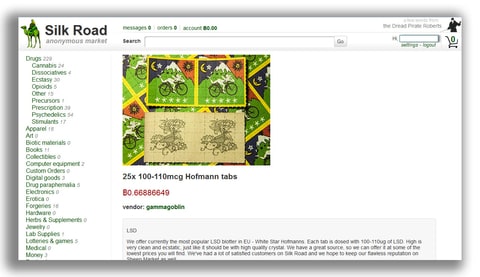
It was in this forum that DPR2 asked hackers to attack competing dark web marketplaces. Over the past few months he had been handling customer service for the massive online enterprise called Silk Road. It was like a clandestine eBay, a digital marketplace for illicit trade, mostly drugs. Green, under the handle Chronicpain, had parlayed his extensive personal narcotics knowledge—he’d been on pain meds for years—into a paying gig working for the site. Silk Road was hidden in the so-called dark web, a part of the Internet that’s invisible to search engines like Google.